The question of who owns AI accountability usually surfaces too late – after a model has influenced a hiring decision, flagged a customer as high risk, shaped a capital allocation view, or accelerated a strategic recommendation nobody can fully explain. By that point, the organization is no longer debating innovation. It is dealing with ownership, exposure, and the credibility of its decision process.
This is not primarily a technology question. It is a governance question.
Many leadership teams still discuss AI as if accountability can be delegated to the technical function closest to the tool. That is convenient, but it is rarely true. When AI affects judgment, prioritization, approval, pricing, hiring, underwriting, medical review, or strategy, accountability follows the decision right into the existing authority structure. The tool may be new. The burden of ownership is not.
Who owns AI accountability in practice?
The shortest answer is this: the person or body with authority over the decision owns accountability for how AI is used within that decision.
That means accountability does not sit exclusively with the data science team, the CIO, the vendor, or legal. Each of those groups carries real responsibility. None of them can absorb the accountability that belongs to the executive, business leader, or governing body authorizing the outcome.
This distinction matters because organizations often confuse contribution with ownership. A model may be built by one team, procured by another, reviewed by legal, and deployed by operations. Yet if it changes how credit is approved, how employees are evaluated, or how resources are allocated, the accountable owner is the leader who holds authority over that domain.
AI complicates attribution, but it does not erase it.
Why the confusion persists
Part of the problem is structural. AI cuts across functions faster than most governance systems were designed to handle. Product wants speed. Technology wants performance. Compliance wants controls. Legal wants defensibility. The business wants outcomes. Each group sees only part of the exposure.
The second problem is psychological. AI creates a temptation to treat output as externally generated rather than internally owned. If a recommendation came from a model, people can begin to speak as if the model made the call. It did not. Someone chose to use it, trust it, scale it, and act on it.
The third problem is language. Teams often say AI is “supporting” a decision when, in reality, it is shaping the range of options, changing the pace of review, and influencing what people treat as credible. Once a system materially affects judgment, the accountability standard rises.
The real accountability map
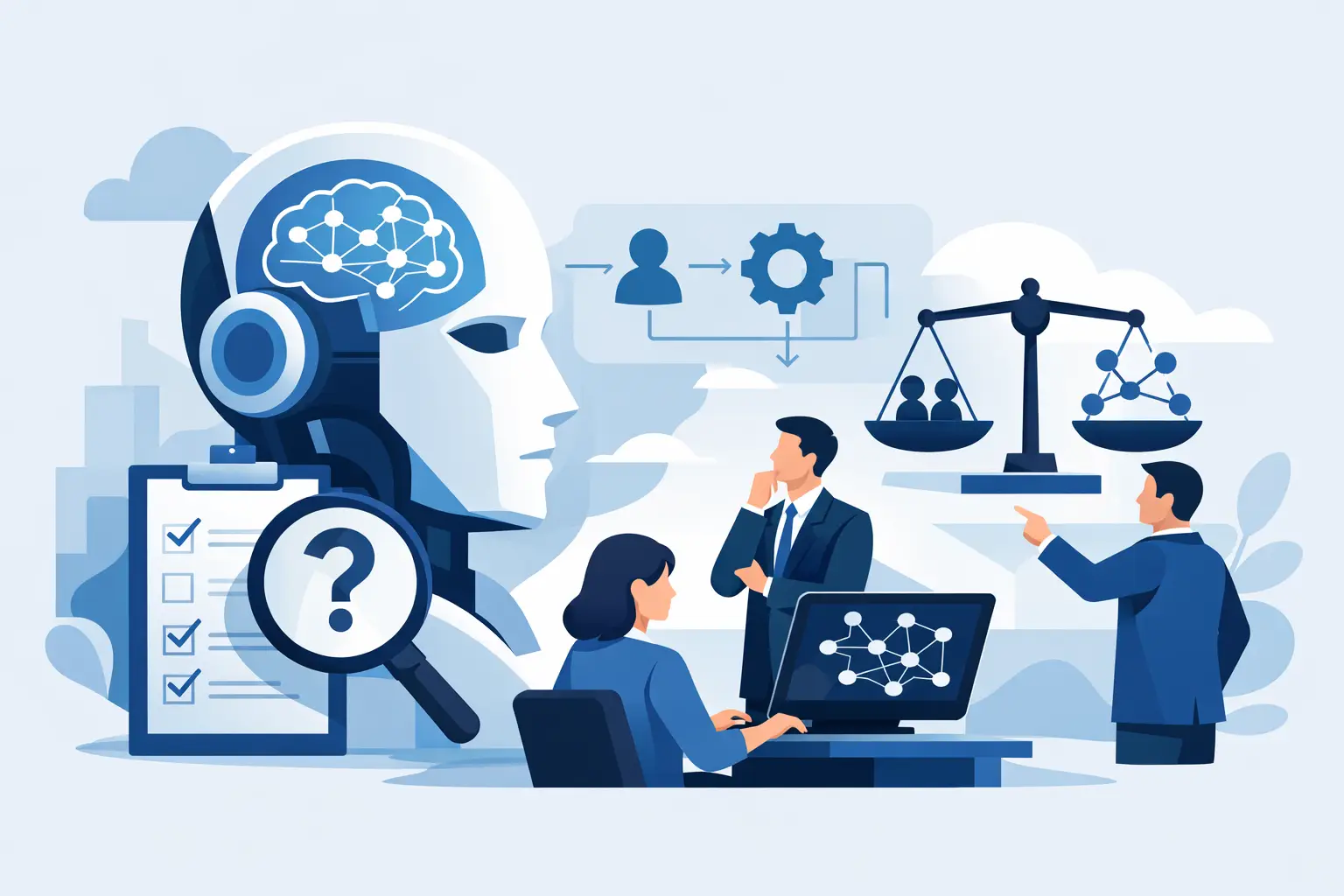
Boards, executives, managers, technical leaders, risk teams, and vendors all have roles. Their responsibilities are different, and that difference should be explicit.
The board owns oversight
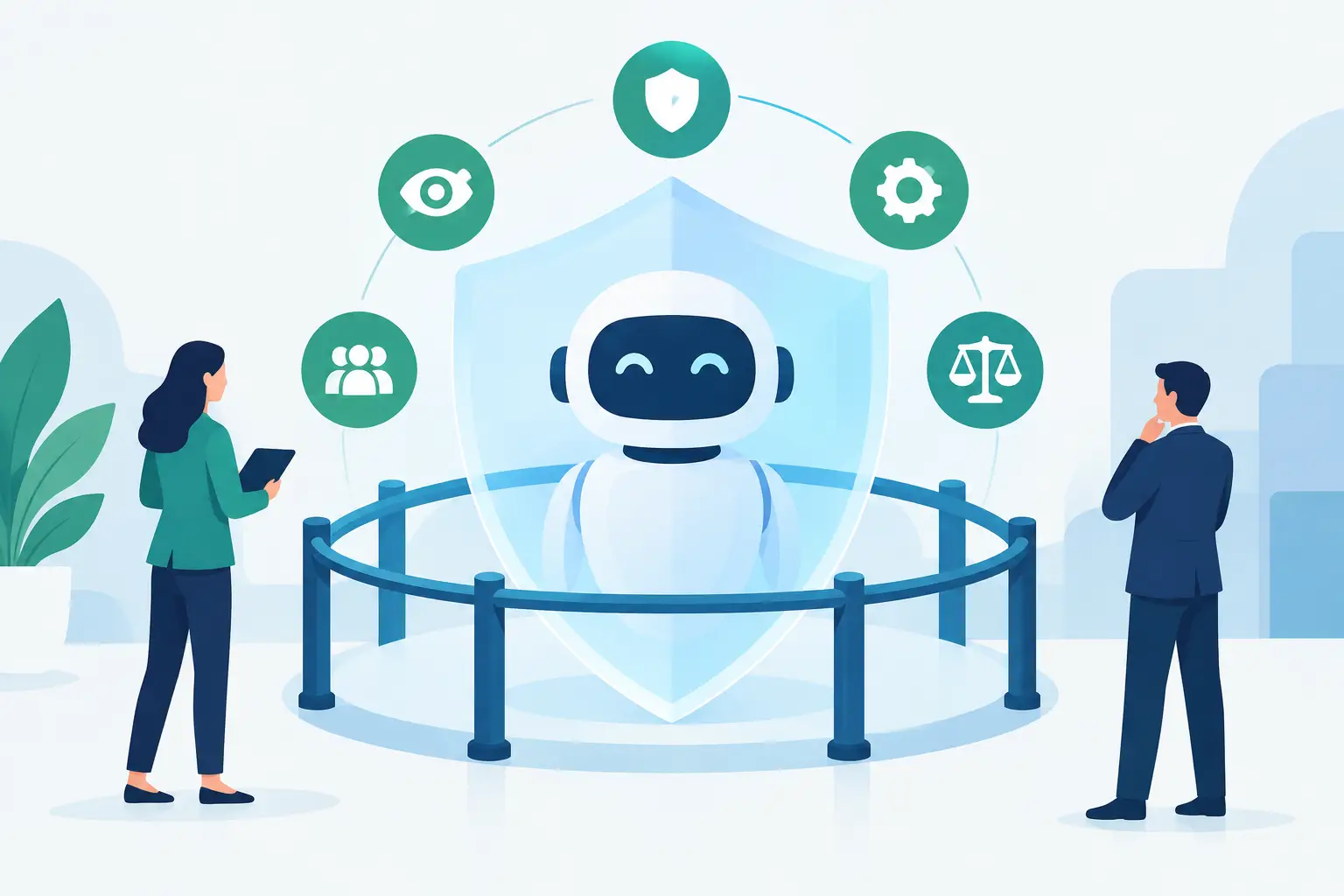
The board does not own every AI decision. It owns oversight of the conditions under which consequential AI decisions are made. That includes understanding where AI is affecting material risk, whether management has clear ownership structures, and whether the organization is relying on systems it cannot adequately challenge.
A board should not be deciding model thresholds or prompt design. It should be asking harder questions. Where is AI influencing regulated, fiduciary, reputational, or irreversible decisions? Who can approve deployment? What evidence is required before scaling use? How are exceptions handled? What happens when model performance drifts but commercial pressure remains?
If the board cannot identify where accountability lands, governance is already weak.
The executive team owns policy, boundaries, and consequences
Senior management owns the operating environment in which AI is used. That means setting decision rights, escalation thresholds, use-case boundaries, and review standards. It also means refusing the fiction that an enterprise AI policy, by itself, creates accountability.
Policy can describe expectations. It cannot substitute for named ownership.
A sound executive stance is simple: if AI changes a business decision, the accountable executive for that business decision remains accountable after AI is introduced. The CFO owns AI-assisted finance decisions within their remit. The CHRO owns AI-assisted talent decisions. The chief risk officer owns risk frameworks. The CEO owns whether the enterprise is tolerating ambiguity it cannot defend.
Business leaders own outcomes in their domain
This is where accountability is most often blurred and most urgently needs to be restored.
A business unit leader cannot say, in effect, “technology implemented it” if customers are harmed, employees are screened unfairly, or a strategic forecast is accepted without challenge because an AI tool produced it. If the tool is being used inside their operating domain, they own the consequences of that use.
That does not mean they need to understand every technical detail. It does mean they must understand enough to judge fitness for purpose, known limitations, failure modes, and escalation triggers. Accountability without comprehension is ceremonial.
Technical and data leaders own system integrity
Technical teams carry serious responsibility, but a different kind. They are responsible for model design, validation discipline, data quality, architecture, access controls, monitoring, documentation, and change management. They should be expected to characterize confidence, limitations, bias risks, and operational dependencies with precision.
What they should not be asked to do is carry the full moral, legal, and commercial burden for business decisions they do not control. That is one of the fastest ways to create false assurance and quiet resentment inside a leadership system.
Risk, legal, and compliance own challenge and control
These functions are not there to “approve AI” in the abstract. They exist to test whether the organization is exposing itself to risks it has not properly framed.
Their role is to challenge assumptions, define control requirements, identify regulatory implications, and force sharper articulation of use-case boundaries. They should help management distinguish between reversible efficiency gains and decisions with lasting human, financial, or legal consequence.
But they do not own the business decision either. Their authority is protective, not substitutive.
Vendors own representations and performance within their scope
External providers are responsible for what they claim, what they deliver, and what they disclose. If a vendor overstates explainability, underplays bias risk, or obscures training limitations, that matters. But vendor responsibility does not transfer enterprise accountability.
Buying AI from a reputable provider does not outsource judgment. It simply changes one part of the dependency chain.
Where AI accountability actually fails
Failure usually begins before deployment. It starts when leaders never define whether AI is informing a decision, narrowing a decision, recommending a decision, or effectively making one unless a human intervenes. Those are not semantic differences. They are governance differences.
A dashboard that helps a manager see trends raises one level of accountability. A model that ranks employees for promotion raises another. A system that auto-denies claims or adjusts pricing at scale raises another still.
The more AI compresses human review, the more explicit ownership must become.
Another failure point is collective language. When everyone is “involved,” nobody is answerable. Steering committees, working groups, and AI councils can be useful. They can also become elegant ways to diffuse ownership. Senior leaders should be wary of any structure that produces discussion without a named decision owner.
There is also a timing problem. Many organizations assess accountability after tool selection rather than before use-case approval. That reverses the order that disciplined governance requires. The first question is not which model is best. It is whether the decision itself is suitable for AI influence, under what conditions, and with whose authority.
A better standard for assigning ownership
A practical standard is to assign AI accountability by following five questions.
First, what decision is being influenced? Second, who already owns that decision without AI? Third, how much human judgment remains once AI is introduced? Fourth, what is the consequence of error at scale? Fifth, who has authority to stop or constrain use if the system underperforms or behaves unexpectedly?
If those answers are vague, accountability is vague.
This is also where trade-offs matter. Centralizing AI governance can improve consistency, but it can distance ownership from business reality. Leaving all responsibility with business units preserves domain accountability, but it can create uneven standards and hidden exposure. The right model is rarely purely centralized or purely local. It depends on the materiality of decisions, regulatory context, organizational maturity, and the speed at which AI use is spreading.
For most firms, the stronger approach is federated: enterprise-level standards, domain-level accountability, and clear escalation into executive and board oversight when stakes rise.
Who owns AI accountability when judgment is shared?
In complex organizations, judgment is often shared. That does not mean accountability should be.
Shared input is normal. Shared accountability for consequential decisions is usually a design flaw. One executive can own a decision while relying on technical, legal, operational, and financial challenge. In fact, that is what strong governance looks like. Clear ownership paired with disciplined dissent.
This is especially relevant in boardrooms and investment settings, where AI may shape scenarios, diligence synthesis, risk flags, or valuation assumptions. If AI enters the room, the standard should not be enthusiasm or fear. It should be decision clarity. What role is the system playing, who is relying on it, what assumptions remain untested, and who is prepared to stand behind the call when outcomes are reviewed later?
That is the frame serious leadership teams should keep.
AI can improve speed, consistency, and analytical range. It can also dilute ownership if introduced carelessly. The organizations that handle this well do not ask technology to solve an accountability problem. They use governance to keep authority, judgment, and consequence connected – exactly where they belong.